
- Home
- Products
- Company
- Solutions
- Advantages
- Blog
- Contact
- Hot
Views: 0 Author: Site Editor Publish Time: 2025-12-26 Origin: Site


In the wire and cable manufacturing industry, achieving the highest quality and precision is essential. Among the various processes involved in wire production, annealing and tinning are two of the most crucial. Annealing helps improve the wire's ductility, electrical conductivity, and mechanical properties, while tinning provides a layer of corrosion resistance and solderability, which is vital for many applications.
Traditionally, wire manufacturers have used different methods to perform annealing and tinning, but the introduction of tubular annealing-tinning machines has significantly enhanced both processes. These machines have streamlined the production of wire by combining annealing and tinning in one efficient system. However, other methods still exist, and each has its advantages and limitations.
This article will explore tubular annealing-tinning machines and compare them with alternative methods of wire annealing and tinning. We will look at the efficiency, cost-effectiveness, and quality produced by each method, helping manufacturers determine which system best suits their needs.
Before diving into a comparison of the methods, it’s important to understand the annealing and tinning processes, as they are essential to wire production.
Annealing is a heat treatment process used to relieve internal stresses in the wire, making it more pliable, ductile, and suitable for further processing. The wire is heated to a specific temperature, usually within the metal's recrystallization range, and then cooled slowly, allowing for the realignment of crystalline structures. The process can improve:
Ductility: Makes the wire easier to draw into thinner gauges.
Conductivity: Enhances the wire's electrical performance.
Grain Structure: Improves the wire's mechanical properties, such as flexibility and strength.
Tinning involves coating the wire with a thin layer of tin. This process helps to:
Enhance Corrosion Resistance: Tin is resistant to rust, which extends the wire's lifespan, especially when exposed to moisture or environmental factors.
Improve Solderability: Tinned wires are much easier to solder, making them ideal for electrical assemblies and circuit boards.
Increase Durability: Tin provides an additional protective layer that increases the wire’s longevity.
These two processes are typically carried out sequentially, and tubular annealing-tinning machines provide a highly efficient method for combining them in a continuous and controlled manner.
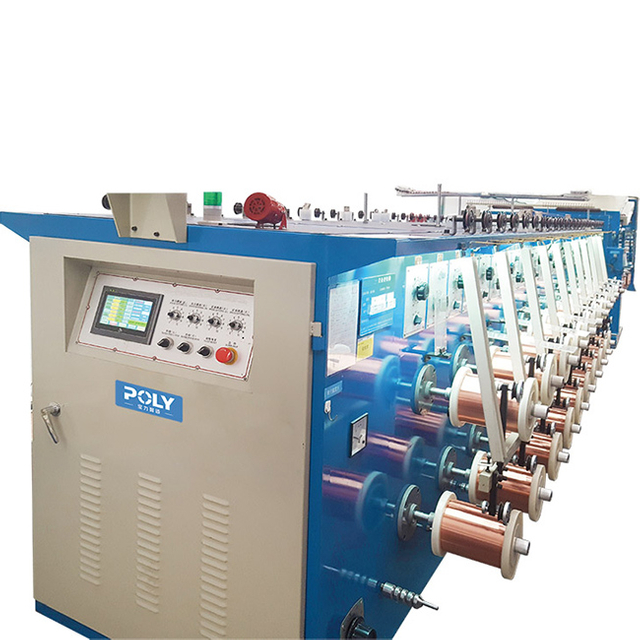
A tubular annealing-tinning machine combines both annealing and tinning into one integrated system. The wire passes through a tubular furnace for annealing and then into a tinning bath where a thin layer of tin is applied. The machine then cools the wire, preserving its properties and ensuring that it meets industry standards for ductility, conductivity, and solderability.
These machines are widely used for the production of high-quality wire used in electronics, telecommunications, automotive, and power transmission. One of the key advantages of these machines is their ability to deliver high-speed production, precise temperature control, and uniform tinning, making them efficient and cost-effective for large-scale operations.
Integrated Process: These machines combine both processes in a single unit, reducing the need for separate machines and streamlining the production process.
Energy Efficiency: Modern tubular annealing-tinning machines use energy-efficient heating and tinning bath systems, which reduce energy consumption and lower operational costs.
Precision and Control: Advanced temperature control systems ensure that both annealing and tinning are carried out with high precision, improving product quality.
Consistency: Continuous, automated operation ensures consistent quality across batches, reducing defects and waste.
Flexibility: Tubular annealing-tinning machines can be customized to handle a variety of wire types, sizes, and tin coatings, making them adaptable to different industries.
While tubular annealing-tinning machines have become the industry standard, there are other methods of annealing and tinning that may be suitable for certain applications. Below, we’ll explore alternative methods and compare them to the advantages offered by tubular machines.
Resistance annealing uses electrical resistance to generate heat in the wire. The wire is passed through resistive coils that heat it up as it travels through the system. This method is commonly used for small wire gauges or in applications where precise temperature control is not as critical.
Cost-Effective for Small Batches: Resistance annealing machines can be less expensive and more suitable for smaller batches of wire, making them ideal for operations with lower production volumes.
Simple Operation: The process is relatively straightforward and doesn’t require complex control systems.
Less Precise Control: Temperature control is less precise than in tubular annealing-tinning machines, potentially leading to inconsistent results.
Energy Inefficiency: The process can be less energy-efficient than modern tubular systems, as energy is not always applied uniformly to the wire.
Limited Production Speed: Resistance annealing is typically slower than tubular annealing, especially for larger batches.
Flame annealing involves heating the wire using an open flame, typically from gas burners. This method is often used for thicker wires or wires made of copper or brass, where high heat is necessary to achieve the desired properties.
Fast Heating: Flame annealing can heat the wire very quickly, making it suitable for high-throughput production environments.
Flexibility: The method can be adapted to handle a variety of wire types and materials, including copper and brass.
Inconsistent Heating: The risk of uneven heating is high in flame annealing, which can lead to inconsistent wire properties.
Energy Consumption: The process can be energy-intensive, particularly if the heat is not applied efficiently.
Potential for Oxidation: If not carefully controlled, the wire can develop oxidation during the flame heating process, compromising its quality.
Electrolytic tinning is a process in which a thin layer of tin is deposited on the wire through an electrolytic bath. The wire is immersed in a tin bath, and an electric current is passed through the system to deposit tin onto the wire surface. This method is commonly used for high-volume wire production, particularly for small wires used in electronics.
Consistent Coating Thickness: Electrolytic tinning provides a very uniform tin coating, which is critical for wires used in electronic applications.
High-Speed Production: The process is faster than traditional tinning methods, allowing for high-speed production of tinned wire.
Energy Efficiency: Electrolytic tinning is more energy-efficient compared to other tinning methods, as it uses electricity to drive the reaction.
Complex Equipment: The equipment required for electrolytic tinning can be more complex and expensive than traditional methods.
Chemical Waste: The process generates chemical waste from the tinning bath, which needs to be properly managed and disposed of.
In hot-dip tinning, the wire is dipped into a molten tin bath to apply the tin coating. This method is widely used for larger wires and is especially common in industries where corrosion resistance is critical.
Thicker Coating: Hot-dip tinning can produce a thicker tin coating than electrolytic tinning, which is beneficial for wires exposed to harsh environmental conditions.
Simplicity: The process is relatively simple and can be easily integrated into wire manufacturing lines.
Slower Process: The process tends to be slower compared to electrolytic tinning, especially for high-volume production.
Inconsistent Coating: Achieving uniformity in the tin coating can be challenging, leading to variability in wire quality.
When it comes to precision and control over the annealing and tinning processes, tubular annealing-tinning machines are the superior choice. These machines offer fine-tuned temperature control and automated systems that ensure consistent results. In contrast, resistance annealing and flame annealing can lead to inconsistent heating, resulting in variations in wire properties.
Tubular annealing-tinning machines are designed to be energy-efficient, with advanced heating systems and heat recovery technologies. In contrast, methods like flame annealing tend to be more energy-intensive and less efficient. Electrolytic tinning is more energy-efficient than hot-dip tinning, but it can still generate excess waste due to the chemicals involved.
Tubular annealing-tinning machines offer high-speed operation, making them ideal for large-scale production. While electrolytic tinning is also suitable for high-volume production, hot-dip tinning and resistance annealing tend to be slower, particularly in high-speed settings.
For industries that require high-quality wire, such as electronics and telecommunications, tubular annealing-tinning machines offer the most consistent results. Electrolytic tinning also provides high-quality, uniform coatings, while hot-dip tinning may not offer the same level of uniformity.
While tubular annealing-tinning machines offer superior quality and efficiency, they can be more expensive upfront compared to methods like resistance annealing or flame annealing. However, the long-term benefits of reduced waste, improved energy efficiency, and higher production speed can offset the initial investment.
Choosing the right method for annealing and tinning depends on the specific requirements of the wire manufacturing process, the industry, and the desired product quality. Tubular annealing-tinning machines provide an efficient, energy-saving, and high-quality solution for manufacturers, offering precision, speed, and flexibility. While alternative methods such as resistance annealing, flame annealing, and electrolytic tinning have their advantages, tubular machines stand out for their comprehensive process integration, energy efficiency, and consistent results.
By selecting the right tubular annealing-tinning machine or process for your needs, you can improve both the quality of your wire and your production efficiency, ultimately contributing to greater cost savings and improved profitability in your business.

 English
 简体中文
简体中文

