
- Home
- Products
- Company
- Solutions
- Advantages
- Blog
- Contact
- Hot
Views: 0 Author: Site Editor Publish Time: 2026-03-05 Origin: Site


In the modern wire manufacturing industry, selecting the right EDM brass wire drawing machine is a critical decision that impacts production efficiency, product quality, and overall factory profitability. Whether operating a small workshop or a large industrial facility, understanding the key production data behind these machines ensures that investment decisions are informed and strategic.
Production data is not just about speed or output, but encompasses a range of performance metrics, technical specifications, and operational insights that collectively determine whether a machine meets your factory’s needs. From manual systems designed for low-volume, customized wire production to fully automatic machines optimized for high-volume, continuous operations, different machines generate and rely on different production data points.
This article explores the most important production data metrics to consider when purchasing an EDM brass wire drawing machine, how to interpret this data, and how it impacts machine selection, operational efficiency, and long-term profitability. It also examines the differences between manual and automatic systems, relevant case studies, and emerging trends in wire manufacturing.
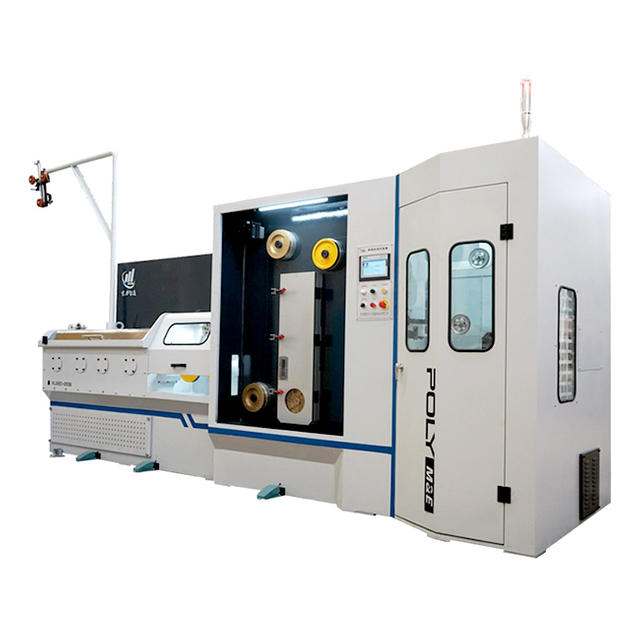
An EDM brass wire drawing machine is a precision tool used to reduce the diameter of brass wire while maintaining mechanical and electrical properties. It integrates mechanical tension control with electrical discharge machining (EDM) to achieve high-precision wire reduction and superior surface finish.
Key functions include:
Reducing wire diameter to exact specifications
Maintaining surface smoothness for downstream processing
Ensuring consistent tensile strength and ductility
Handling a variety of brass alloys for industrial and electrical applications
Understanding how these machines operate is essential to appreciate which production data metrics truly matter when evaluating options.
Wire Feeding Mechanism: Ensures consistent wire entry into drawing dies.
Drawing Dies: Precisely reduce wire diameter while maintaining roundness.
Tension Control System: Maintains consistent tension to prevent wire breakage.
EDM Control Unit: Optimizes electrical discharge parameters for surface quality.
Cooling and Lubrication System: Reduces friction and prolongs die life.
Take-Up Mechanism: Collects drawn wire onto spools for subsequent use.
Each component affects measurable production data such as output rate, wire consistency, die wear, and energy consumption.
When evaluating an EDM brass wire drawing machine, the following production data metrics are essential:
Wire diameter consistency is critical for product quality. Factories must evaluate:
Tolerance ranges: Maximum deviation allowed for industrial specifications
Roundness and uniformity: Ensures wire fits in downstream processes
Process stability: Variance over time under continuous operation
High-precision EDM machines offer automated monitoring and alerts for diameter deviations, reducing waste and rework.
Surface smoothness impacts electrical conductivity, coating adherence, and mechanical performance. Production data metrics include:
Micron-level roughness measurements
EDM parameter logs: Voltage, pulse rate, and feed adjustments affecting surface quality
Inspection frequency: Percentage of wires meeting surface finish standards
Output efficiency is a critical metric for ROI. Data to monitor:
Meters per hour (m/h) or kilograms per hour (kg/h)
Cycle time for each wire segment
Downtime metrics: Time lost due to manual adjustments or machine stoppages
Automatic machines typically generate higher throughput than manual systems, which is important for high-volume factories.
Maintaining consistent wire tension prevents breakage and maintains quality. Relevant data includes:
Tension variance over time
Load response curves under different wire diameters
Real-time tension monitoring via integrated sensors
High-quality machines report tension data continuously, enabling predictive maintenance and operational efficiency.
Die wear affects both precision and operational cost. Key metrics:
Number of meters drawn per die before replacement
Lubrication and cooling parameters
Die replacement intervals and downtime impact
Automatic machines often provide automated die lubrication control, extending die life and reducing human error.
Energy efficiency is increasingly important for industrial sustainability. Relevant production data:
Power usage per meter or kilogram of wire produced
Motor load and EDM energy settings
Cooling and lubrication energy requirements
Factories can reduce costs and carbon footprint by selecting machines with optimized energy consumption profiles.
Minimizing scrap improves profitability. Track:
Percentage of wire rejected due to diameter deviation, surface flaws, or tensile strength issues
Root cause analysis logs for production defects
Comparison of manual versus automatic operation impact
Unplanned downtime is costly. Monitor:
Mean time between failures (MTBF)
Maintenance frequency and duration
Availability of replacement parts
Automatic machines with predictive maintenance features can provide real-time alerts, reducing unexpected stoppages.
Manual EDM wire drawing machines generate production data mostly via operator logs and inspections:
Wire diameter measurements
Surface finish evaluation
Daily output rate
Operator notes on tension and die wear
Advantages:
Flexibility for small-batch or customized wire
Low initial investment
Limitations:
Data consistency depends on operator skill
Limited ability to capture real-time performance metrics
Lower throughput
Automatic machines continuously log operational data via integrated sensors and controllers:
Real-time tension and feed monitoring
Diameter accuracy tracking per spool
Surface finish metrics via EDM control parameters
Energy consumption and die wear monitoring
Advantages:
High production efficiency and consistent quality
Data-driven maintenance and operational optimization
Easy scalability for large-scale production
Limitations:
Higher upfront cost
Maintenance requires specialized technicians
A small electrical component workshop uses manual EDM machines for custom brass wire. Production data showed:
Diameter variance: ±0.01 mm
Average throughput: 50 meters/hour
Die life: ~2,000 meters before replacement
Operators manually adjusted tension and feed rates, ensuring wire quality, but labor-intensive monitoring limited overall efficiency.
A high-volume factory producing standardized brass wire implemented automatic EDM machines. Production data revealed:
Diameter variance: ±0.002 mm
Throughput: 300 meters/hour per machine
Die life: ~15,000 meters
Energy consumption reduced by 12% per kg of wire
Continuous monitoring and automated adjustments minimized defects and improved ROI.
Analyzing production data helps calculate ROI:
Throughput × defect rate × labor cost savings
Energy efficiency and maintenance cost reduction
Die life extension and reduced downtime
Automatic machines, despite higher upfront cost, often achieve faster ROI due to high production efficiency and lower scrap rates.
Production data highlights labor intensity:
Manual machines require constant monitoring, adding personnel costs
Automatic machines reduce operator dependency, freeing staff for multiple tasks
Data on die wear, lubrication efficiency, and downtime informs preventive maintenance strategies, minimizing long-term costs.
Small-scale factories: manual machines offer flexibility
Large-scale factories: automatic machines provide consistent high-volume output
Custom alloys and variable diameters favor manual machines
Standardized wire production benefits from automatic machines
Skilled operators are critical for manual machine operation
Automatic machines reduce reliance on operator expertise
Factories can use production data analytics to optimize processes, schedule maintenance, and make informed decisions on machine upgrades or replacement.
Modern EDM machines integrate sensors to monitor:
Wire tension and speed
Die wear and lubrication
Electrical discharge parameters
Real-time quality control
This enables predictive maintenance, process optimization, and automated quality assurance.
Factories with variable production requirements adopt semi-automatic machines that combine operator flexibility with automated precision.
Optimized motors, control systems, and lubrication techniques reduce energy consumption, enhancing sustainability and lowering operational costs.
Integration with wire spooling, coiling, and automated feeding systems ensures consistent production quality and higher throughput.
Key steps:
Analyze production volume requirements: High-volume factories benefit from automatic machines.
Evaluate wire specifications: Custom or specialty wires may require manual adjustments.
Examine labor availability: Automatic machines reduce reliance on skilled operators.
Review ROI and operational costs: Consider throughput, scrap rates, and maintenance data.
Assess factory infrastructure: Power supply, floor space, and environmental control affect machine choice.
When purchasing an EDM brass wire drawing machine, production data is the most critical factor guiding decision-making. Metrics such as wire diameter accuracy, surface finish quality, throughput, tension stability, die life, energy consumption, scrap rates, and downtime provide actionable insights into machine performance.
Manual EDM machines are best suited for low-volume, custom, or specialized wire production, offering flexibility and lower upfront investment. Automatic machines excel in high-volume, continuous production, delivering consistent quality, operational efficiency, and long-term cost savings.
For professional EDM brass wire drawing machines and expert guidance on factory applications, contact Zhangjiagang Poly Intelligent Equipment Co., Ltd. Their solutions offer precision, efficiency, and reliable performance for both manual and automatic wire drawing operations.
Q: What production data is most important when evaluating EDM wire drawing machines?
A: Key metrics include wire diameter accuracy, surface finish, throughput, tension stability, die life, and energy consumption.
Q: When should a factory choose a manual EDM machine?
A: Manual machines are ideal for small-scale, custom, or specialty wire production with flexible diameter requirements.
Q: What advantages do automatic EDM machines offer?
A: Automatic machines provide high throughput, consistent quality, lower labor costs, and better process monitoring.
Q: How does production data impact ROI and operational efficiency?
A: Analyzing production data allows factories to optimize processes, reduce scrap, minimize downtime, and calculate ROI more accurately.

 English
 简体中文
简体中文

