
- Home
- Products
- Company
- Solutions
- Advantages
- Blog
- Contact
- Hot
Views: 0 Author: Site Editor Publish Time: 2026-03-03 Origin: Site


In the contemporary wire manufacturing industry, producing high-quality brass wire efficiently is crucial for factories that serve electrical, electronic, and industrial sectors. Among the advanced technologies available, EDM (Electrical Discharge Machining) brass wire drawing machines have emerged as a key solution to achieve precision, consistency, and productivity. These machines reduce brass wire diameter to exact specifications while maintaining surface finish and tensile strength, critical for high-performance applications.
Factory owners face an important decision: invest in manual wire drawing machines or opt for automatic systems. Each type offers distinct advantages and limitations in terms of production capacity, operational costs, labor requirements, and product quality. Choosing the right system impacts not only the factory’s output but also its long-term profitability and competitiveness.
This article provides an in-depth comparison of manual and automatic EDM brass wire drawing machines, exploring their technical principles, applications, performance characteristics, economic considerations, operational requirements, and emerging trends in wire manufacturing technology.
Wire drawing technology has a rich history dating back centuries, originally relying on manual stretching and drawing of metal rods through dies. Early industrial methods were labor-intensive, slow, and prone to inconsistencies. With the advent of electricity and precision machining in the 20th century, EDM technology was integrated into wire drawing to improve precision and surface quality, particularly for electrical-grade brass wires.
EDM brass wire drawing combines mechanical tension control with electrical discharge machining to achieve extremely precise wire diameters and smooth surfaces. This integration allows for:
High dimensional accuracy
Consistent surface finish
Ability to handle specialized alloys
Reduced need for post-processing
As production demands grew, factories required machines capable of continuous, high-volume output, which led to the development of automatic EDM wire drawing machines.
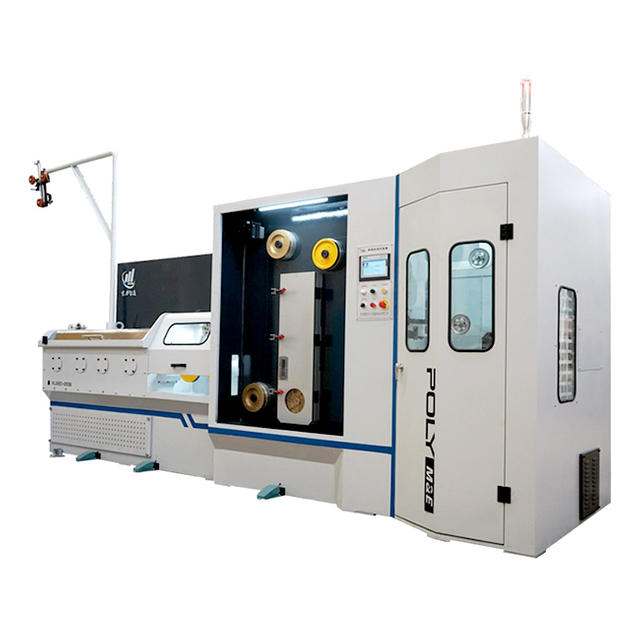
An EDM brass wire drawing machine generally consists of the following components:
Wire Feeding Mechanism: Ensures consistent feed rate of the brass wire into the drawing dies.
Drawing Dies: Precision-engineered dies reduce wire diameter while maintaining circularity.
Tension Control System: Maintains constant tension to prevent wire breakage and ensure uniformity.
EDM Control Unit: Adjusts electrical discharge parameters to enhance surface finish.
Cooling and Lubrication Systems: Prevent overheating, reduce friction, and prolong die life.
Take-Up System: Collects the drawn wire onto spools for downstream processing.
Critical parameters that define the quality of drawn brass wire include:
Dimensional accuracy: Wire diameter uniformity
Surface finish: Smoothness to reduce friction and improve conductivity
Mechanical properties: Tensile strength and ductility
Electrical properties: Conductivity and resistance for electrical applications
Proper operation of an EDM wire drawing machine ensures consistent output that meets industry standards for electrical and industrial wire applications.
Manual wire drawing machines require operators to:
Feed the brass wire through drawing dies
Adjust tension and speed according to the wire alloy and desired diameter
Monitor die lubrication and cooling
Inspect wire for surface defects and dimensional consistency
Manual systems rely heavily on operator skill and experience to maintain quality and prevent wire breakage.
Lower Initial Investment: Suitable for small factories or workshops
Flexibility: Operators can adjust parameters for custom wire sizes or alloys
Ease of Maintenance: Simple mechanical components allow easy servicing
Lower Production Efficiency: Slower output compared to automatic machines
High Labor Dependency: Requires continuous operator attention
Quality Variation: Susceptible to inconsistencies due to human error
Manual EDM machines are ideal for:
Small-scale workshops producing specialty wires
Custom wire drawing projects with varying diameters
Prototyping or pilot production runs for new brass alloys
Automatic machines integrate motorized feeding, tension control, die adjustment, and EDM settings in a fully automated system. Programmable control units regulate wire speed, tension, and lubrication automatically, reducing the need for constant human supervision.
High Production Efficiency: Continuous operation with minimal downtime
Consistent Quality: Automated tension and EDM control maintain uniform diameter and surface finish
Reduced Labor Costs: Fewer operators are needed, allowing supervision of multiple machines
Scalability: Suitable for large-scale industrial production
Higher Initial Investment: Automatic systems require greater upfront capital
Maintenance Complexity: Requires specialized technicians for repairs and calibration
Reduced Flexibility: Less suited for highly customized or small-batch production without reprogramming
Automatic EDM machines excel in:
Large-scale industrial brass wire production
High-volume standardized wire for electrical, construction, and automotive applications
Factories aiming for high throughput and minimized operator intervention
Feature | Manual EDM Wire Drawing | Automatic EDM Wire Drawing |
Production Speed | Moderate | High |
Labor Requirement | High | Low |
Quality Consistency | Variable | Uniform |
Flexibility | High (custom sizes) | Moderate (programmed) |
Initial Cost | Low | High |
Maintenance Complexity | Low | Medium to High |
Automatic machines generally outperform manual systems in production speed, quality, and scalability, while manual machines remain advantageous for small-batch, custom, or specialized wire production.
High-volume factories benefit from automatic EDM machines due to continuous production and reduced operator dependency. Manual machines are suited for smaller operations with lower throughput.
Manual machines allow operators to fine-tune settings for custom brass alloys and non-standard wire diameters, while automatic machines perform best with standardized wire specifications.
Automatic machines reduce the need for skilled operators, while manual machines require experienced staff to maintain quality and productivity.
Automatic machines require specialized technical support, including calibration and software updates. Manual machines have simpler mechanical systems and are easier to maintain locally.
Although manual machines have lower initial costs, their lower production efficiency and higher labor expenses may result in longer ROI periods. Automatic machines provide faster ROI through higher throughput, consistent quality, and reduced labor costs.
Consistency in wire diameter is crucial for electrical and industrial applications. Both manual and automatic machines must maintain tight tolerances to ensure product reliability.
The surface finish affects conductivity, coating adhesion, and mechanical strength. EDM control and proper tensioning are critical for high-quality surfaces.
Automatic machines provide higher output per hour due to continuous operation and integrated automation, while manual machines depend on operator efficiency.
Proper die lubrication and cooling extend die life and ensure consistent quality. Automatic systems maintain precise lubrication control, reducing wear and downtime.
Automatic machines often incorporate optimized motors and EDM controls to minimize energy consumption, reducing operational costs.
A small workshop producing custom brass wire for specialty electrical connectors found that manual EDM machines allowed fine adjustments for alloy variations, but required significant labor input and monitoring, limiting output.
A high-volume industrial factory producing standard brass wire for electrical wiring implemented automatic EDM machines. Production efficiency increased by over 50%, quality consistency improved, and labor costs dropped significantly due to reduced operator requirements.
Automatic machines reduce operator dependency, cutting labor expenses while allowing employees to supervise multiple machines simultaneously.
Automatic machines optimize wire feed and die utilization, reducing scrap and waste. Manual systems may have higher waste rates due to human error.
Automatic EDM systems allow factories to scale production rapidly, meeting market demand without compromising quality.
Advanced automatic systems feature self-monitoring and alerts, enabling predictive maintenance and minimizing unexpected downtime.
Integration of IoT and sensors enables real-time monitoring of tension, die wear, and output, enhancing productivity and reducing downtime.
Some factories adopt semi-automatic systems to balance flexibility for custom wires with automation benefits for standard production.
Modern machines optimize energy consumption, lubrication, and motor control, reducing operational costs and environmental impact.
Using eco-friendly lubricants, recycled components, and optimized production processes improves sustainability in wire manufacturing.
Choosing between manual and automatic EDM brass wire drawing machines depends on factory size, production volume, wire specifications, labor availability, and budget. Manual machines provide flexibility and lower upfront cost for small-scale or custom production, while automatic machines deliver high efficiency, consistent quality, and scalability for large industrial operations.
For professional-grade EDM brass wire drawing machines and technical guidance for your factory, contact Zhangjiagang Poly Intelligent Equipment Co., Ltd. Their solutions ensure precision, efficiency, and reliable performance across diverse industrial applications.
Q: What are the main differences between manual and automatic EDM wire drawing machines?
A: Manual machines rely on operator adjustments and are flexible for custom sizes, while automatic machines offer higher production efficiency and consistent quality.
Q: Which machine is best for high-volume production?
A: Automatic EDM wire drawing machines are ideal due to continuous operation and reduced labor needs.
Q: Can manual machines handle specialized alloys?
A: Yes, manual machines allow fine-tuning for custom brass alloys and non-standard wire sizes.
Q: What factors should factories consider when choosing between manual and automatic machines?
A: Production volume, wire size variability, labor availability, maintenance capabilities, budget, and ROI.

 English
 简体中文
简体中文

