
- Home
- Products
- Company
- Solutions
- Advantages
- Blog
- Contact
- Hot
Views: 211 Author: Site Editor Publish Time: 2026-01-23 Origin: Site


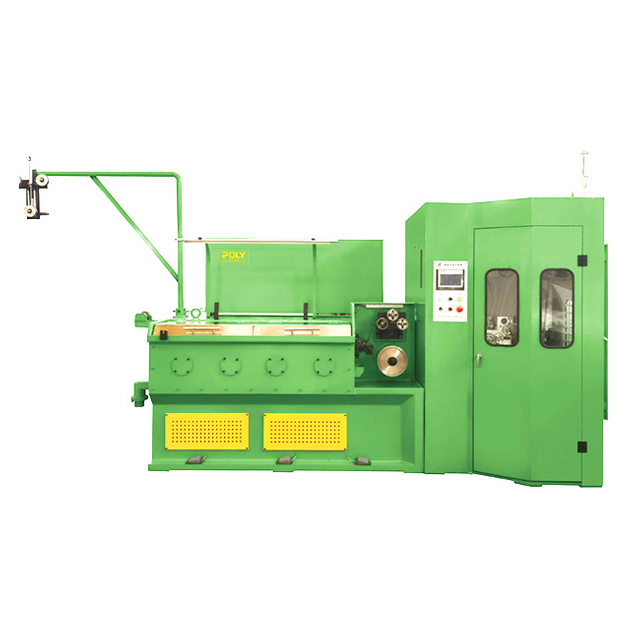
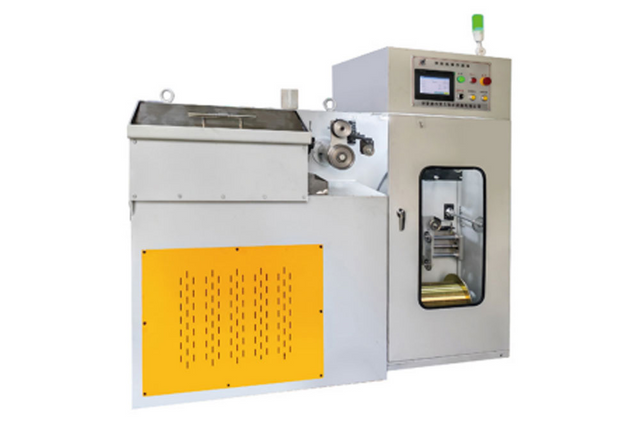
Alloy wire drawing is a highly demanding metal forming process that requires strict control over material behavior, tooling condition, lubrication systems, and machine configuration. As alloy compositions become more complex and application requirements more precise, manufacturers increasingly rely on advanced alloy wire drawing machine systems to meet quality and efficiency targets. However, even with modern technology, alloy wire drawing still presents recurring operational challenges that directly impact productivity, wire quality, and equipment lifespan.
One of the most underestimated causes of wire drawing problems is inconsistent alloy rod quality before it even enters the alloy wire drawing machine. Variations in chemical composition, microstructure, surface scale, or rod diameter can destabilize the entire drawing process, especially when working with high-strength or multi-element alloys.
Alloy materials are inherently more sensitive than pure metals. Minor deviations in alloying elements can alter hardness, ductility, and work-hardening behavior. When these variations meet a High precision alloy wire drawing machine, the result is often fluctuating drawing force, uneven deformation, and unpredictable wire properties.
Implement incoming material inspection focusing on diameter tolerance, surface condition, and hardness consistency.
Introduce controlled pre-treatment steps such as descaling, annealing, or surface coating before drawing.
Adjust reduction ratios in the Professional alloy wire drawing machine to match the specific alloy behavior rather than using standard settings.
Addressing raw material instability early reduces downstream issues such as wire breakage, die damage, and surface defects.
Die wear is a persistent issue in alloy wire drawing due to the higher hardness and abrasive nature of many alloy compositions. Excessive wear directly affects dimensional accuracy, surface finish, and energy efficiency, particularly in High-speed alloy wire drawing machine environments.
As dies wear unevenly, the drawing angle changes, friction increases, and localized stress zones form. This not only shortens die life but also causes wire ovality, micro-cracks, and inconsistent diameter control—undermining the core purpose of a High precision alloy wire drawing machine.
Optimize die material selection and surface polishing based on the specific alloy type.
Monitor die wear using scheduled inspection cycles instead of reactive replacement.
Reduce drawing speed temporarily when processing hard or low-ductility alloys.
| Die-Related Issue | Root Cause | Practical Solution |
|---|---|---|
| Rapid die wear | High friction, poor lubrication | Improve lubricant delivery and die cooling |
| Wire diameter fluctuation | Uneven die wear | Introduce wear-tracking and die rotation |
| Surface scratches | Damaged die entry zone | Re-polish or replace dies promptly |
Consistent die management preserves precision and extends the operational value of the Automatic alloy wire drawing machine.
Surface quality is a key performance indicator in alloy wire drawing, yet defects such as scratches, scoring, peeling, and oxidation are among the most common complaints. These defects are rarely caused by a single factor; instead, they result from imbalances between speed, lubrication, die condition, and material properties within the alloy wire drawing machine.
In Vertical alloy wire drawing machine or Horizontal alloy wire drawing machine configurations, improper tension control or misaligned wire paths can amplify surface damage, especially when drawing thin or high-strength alloy wires.
Maintain consistent tension control across all drawing stages.
Ensure proper alignment of capstans, guides, and dies to avoid lateral stress.
Match lubricant viscosity and delivery rate to drawing speed and alloy hardness.
Surface defects often indicate systemic imbalance rather than isolated failure, making holistic process tuning essential.
Wire breakage is one of the most disruptive issues in alloy wire production, causing downtime, material waste, and safety risks. In many cases, breakage is linked to excessive work hardening, poor reduction sequencing, or thermal overload within the alloy wire drawing machine.
Inconsistent tensile strength, even without breakage, signals deeper problems in deformation control. This issue is particularly critical for applications requiring strict mechanical performance, where a High precision alloy wire drawing machine is expected to deliver repeatable results.
Optimize reduction ratios across multiple passes rather than forcing high single-pass reductions.
Introduce intermediate annealing where alloy ductility limits are reached.
Monitor drawing force and temperature in real time using sensors integrated into Automatic alloy wire drawing machine systems.
Stable tensile properties depend on controlled deformation, not maximum speed.
Lubrication plays a dual role in alloy wire drawing: reducing friction and managing heat. Inadequate lubrication leads to elevated temperatures, accelerated die wear, and degraded wire surface quality. This issue becomes more severe in High-speed alloy wire drawing machine operations where thermal buildup occurs rapidly.
Alloys with poor thermal conductivity are especially vulnerable, as heat concentrates at the die-wire interface, increasing the risk of adhesion and micro-cracking.
Select lubricants specifically formulated for alloy wire drawing rather than general metal drawing compounds.
Ensure continuous lubricant circulation and filtration to prevent contamination.
Combine lubrication optimization with active cooling systems in the Professional alloy wire drawing machine design.
Effective lubrication stabilizes the entire drawing process and protects both tooling and wire quality.
Automation improves efficiency, but improper configuration of automated systems can introduce new problems. Excessive speed, poorly tuned control algorithms, or insufficient feedback loops can destabilize the Automatic alloy wire drawing machine, especially when processing variable alloy grades.
Blindly increasing speed often leads to tension spikes, lubrication failure, and accelerated wear—negating the benefits of automation.
Use adaptive control systems that adjust speed and tension based on real-time feedback.
Calibrate sensors regularly to maintain accuracy in force and temperature monitoring.
Balance automation with process understanding rather than relying solely on preset programs.
Automation should enhance control, not replace engineering judgment.
Common issues in alloy wire drawing rarely stem from a single cause. They are the result of complex interactions between material properties, tooling condition, lubrication systems, and machine configuration. A well-designed alloy wire drawing machine—whether High precision, High-speed, Vertical, or Horizontal—can only perform optimally when supported by disciplined process control and informed operational decisions.
By addressing raw material consistency, die management, surface quality, mechanical stability, lubrication efficiency, and automation logic, manufacturers can significantly reduce defects, downtime, and production costs while achieving stable, high-quality alloy wire output.
Q1: Why is alloy wire drawing more challenging than pure metal wire drawing?
Alloys exhibit complex work-hardening behavior and reduced ductility, making them more sensitive to process imbalance within the alloy wire drawing machine.
Q2: Can increasing speed always improve productivity?
No. Excessive speed often increases heat, wear, and breakage. Productivity depends on stable, controlled operation, especially in High-speed alloy wire drawing machine setups.
Q3: How often should drawing dies be inspected?
Inspection frequency should be based on alloy hardness, drawing speed, and production volume, not fixed time intervals.
Q4: Is automation suitable for all alloy wire drawing applications?
Automation is highly effective when properly configured, but it must be matched to material variability and supported by accurate feedback systems.
Q5: What is the most overlooked factor in alloy wire drawing quality?
Raw material consistency is often underestimated, yet it has a direct impact on every downstream process stage.



 English
 简体中文
简体中文

