
- Home
- Products
- Company
- Solutions
- Advantages
- Blog
- Contact
- Hot
Views: 0 Author: Site Editor Publish Time: 2026-11-27 Origin: Site


Frequent wire breaks during the initial drawing stage are not just a nuisance. They are a primary driver of reduced Overall Equipment Effectiveness (OEE). Every snap severely limits machine availability. These interruptions also increase die wear rapidly and lead to excessive scrap costs. Manufacturers often blame drawing lubricants or die profiles for these persistent issues. However, the root cause frequently traces back to the metallurgical and physical quality of the 8mm input rod.
You must maximize production efficiency and protect expensive machinery. To achieve this, facilities need strict evaluation criteria for input rod quality. You must closely align these material standards with your breakdown machine capabilities. This guide explores how rod defects trigger catastrophic tension failures. We will show you how to audit your material preparation methods. By mastering these variables, you can eliminate frustrating production stops and boost your overall yield.
Input rod quality dictates the baseline limit for production speed; internal inclusions and surface oxides are the leading causes of downtime.
Effective wire rod preparation, including proper shaving and payoff handling, acts as the first line of defense against drawing failures.
Upgrading or optimizing the copper rod breakdown machine can mitigate minor material inconsistencies, but cannot fix fundamental metallurgical defects.
Vendor qualification and inline testing are mandatory decision-stage steps for reducing scrap and improving yield.
Downtime metrics reveal the harsh reality of drawing failures. You must calculate the hidden costs of machine restringing. Operator time is expensive. Lost throughput damages your delivery schedules and frustrates customers. Energy waste climbs significantly as high-horsepower motors idle during the threading process. We often ignore these cascading losses in daily reports. Yet, they devastate monthly production quotas.
Die wear and consumables add another heavy layer of expense. Poor rod quality accelerates the degradation of polycrystalline diamond (PCD) dies. Tungsten carbide dies also suffer extreme wear under abrasive conditions. Surface oxides act exactly like sandpaper inside the drawing zone. They score the carefully polished approach angles inside your dies. This damage forces premature and costly die replacements.
You need strict success criteria. Define a clear baseline for acceptable breakage rates. Many top-tier facilities target less than one break per 100 metric tons. Technical buyers use this exact metric to benchmark their current operations. Tracking copper wire breakage gives you a vital key performance indicator. You can then measure any operational improvements directly against this established baseline.
Evaluating material quality begins with inspecting the rod exterior. Surface oxides and flaking present massive challenges to operators. Improper cooling during the casting process creates hard oxide layers. Bad warehouse storage conditions also cause rapid surface oxidation. These oxides behave as aggressive abrasives inside the drawing die. They score the die bearing and ruin wire surface finishes. You must closely monitor copper rod surface defects to protect your tooling.
Internal inclusions create sudden, catastrophic failures. The continuous casting process sometimes traps foreign materials. These inclusions cannot compress or deform. When they hit the drawing die, the copper snaps instantly. We frequently identify several common contaminants:
Slag deposits pulled into the molten copper pool.
Ferrous particles shedding from worn casting wheels.
Refractory brick fragments from the holding furnace.
Casting voids and porosity are equally destructive. Microscopic air pockets remain hidden inside the cast rod. During the heavy area reduction of drawing, these pockets elongate. They weaken the wire cross-section severely. This specific mechanism directly causes classic cup-and-cone fractures.
Dimensional inconsistencies also disrupt the drawing process. Out-of-round input rods cause uneven lubrication distribution. The drawing fluid cannot form a uniform hydrodynamic film. Localized thermal spikes occur where friction is highest. The input rod must remain perfectly cylindrical to draw efficiently.
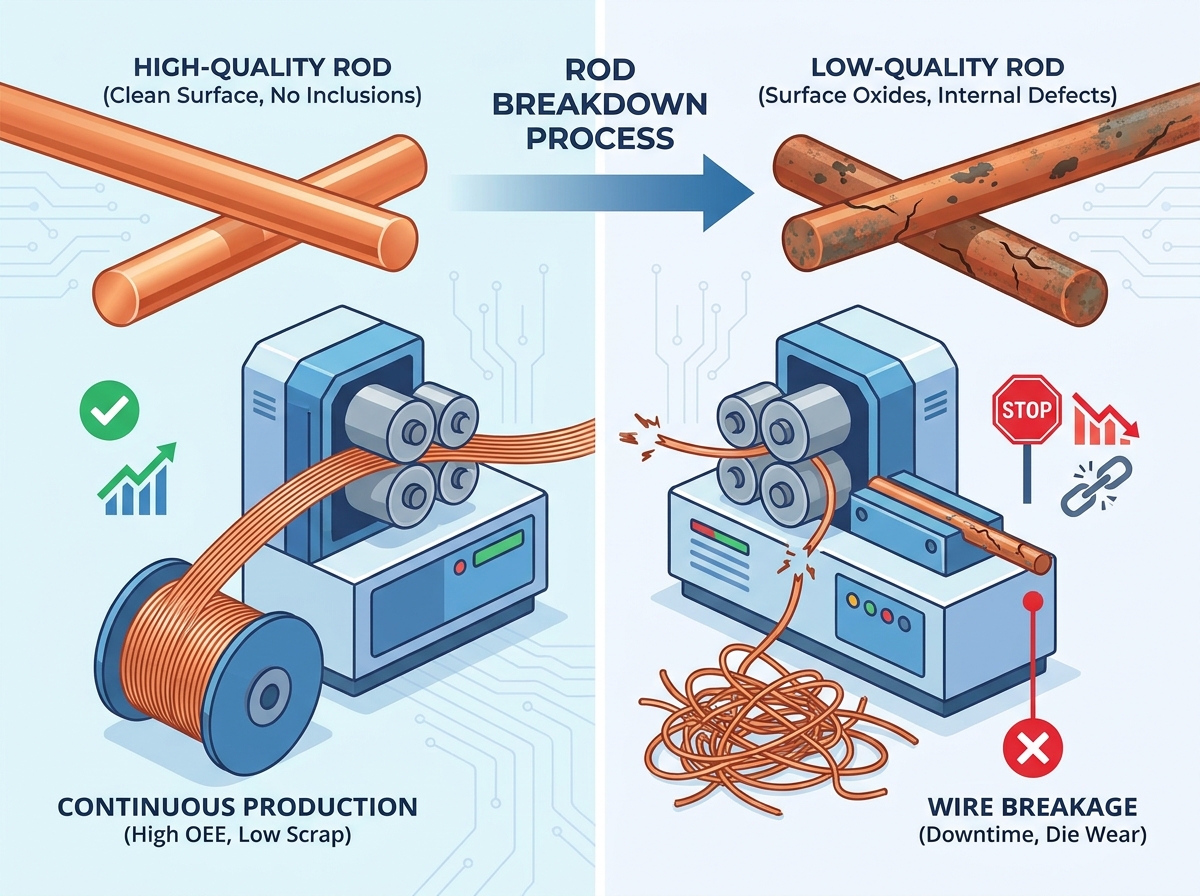
Process considerations heavily dictate your drawing success. Pre-cleaning and shaving eliminate many surface risks. You must evaluate the necessity of rod shaving for your specific material grade. Shaving physically cuts away the outer oxidized skin before it enters the drawing sequence. Proper wire rod preparation acts as your critical first line of defense against drawing failures.
Payoff mechanics control the physical stress applied to the rod. Improper tensioning strains the copper before drawing even begins. Snagging at the payoff station stretches the material dangerously. Poor coil handling introduces overlaps and tight tangles. Your payoff unit must feed rod smoothly and consistently. Any sudden jerks will translate into instantaneous tension breaks inside the machine.
Storage and handling practices directly impact drawability. We must address the harsh environmental realities of storing copper rod. High humidity rapidly accelerates surface oxidation. Exposure to industrial fumes degrades the copper skin. Keeping coils sealed and indoors protects their metallurgical integrity.
Environmental Storage Guidelines for Copper Rod
Storage Condition | Oxidation Risk Level | Mitigation Strategy |
|---|---|---|
Outdoor Storage (Uncovered) | Critical | Move inventory indoors immediately; expect heavy shaving requirements. |
Indoor Storage (High Humidity) | Moderate | Utilize shrink wrap and maintain climate-controlled zones. |
Indoor Storage (Climate Controlled) | Low | Implement strict First-In, First-Out (FIFO) inventory practices. |
Solution categories and equipment assessments help you optimize production. Lubrication and filtration systems require constant attention. High-volume emulsion systems flush out copper fines generated during drafting. Poor filtration reintroduces this abrasive copper dust back into the die zone. This exacerbates surface defects and destroys internal die profiles. You must maintain your emulsion concentration strictly between 5% and 8% for optimal lubricity.
The drafting sequence, or die schedule, must match your material grade. Analyze whether the area reduction per draft is too aggressive. High-grade rod handles 26% area reduction easily. Lower-grade rod with impurities requires gentler drafts around 20%. Aggressive drafting on poor rod guarantees frequent breaks. You need to balance reduction rates with material ductility.
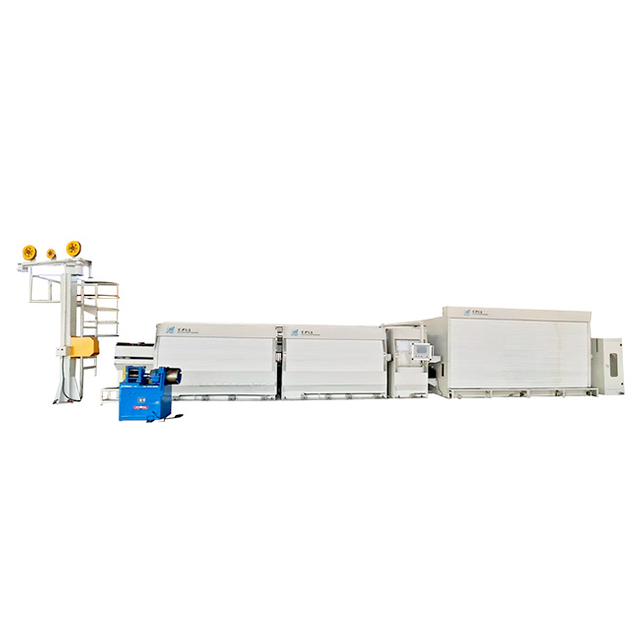
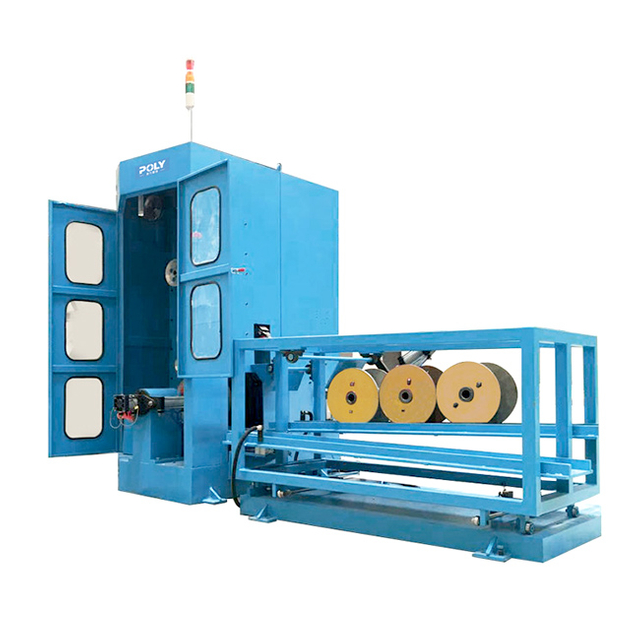
Slip versus non-slip mechanics dictate how the machine handles elongation. The capstan design manages elongation and tension through the entire sequence. Older slip machines rely heavily on controlled friction. They amplify the risks of minor rod defects if capstans become grooved. Non-slip designs offer vastly superior tension control. A modern copper rod breakdown machine adjusts speeds dynamically to prevent tension spikes.
You need a solid decision framework. Determine if high breakage rates require a change in raw material suppliers. Sometimes, you merely need an upgrade to the emulsion filtration system. In other cases, full modernization of the breakdown machine itself remains the only viable solution to maintain profitability.
Implementation and shortlisting logic streamline your troubleshooting efforts. Fracture analysis serves as your most powerful diagnostic tool. Operators must learn how to read the physical break. Tension breaks look entirely different from inclusion breaks. A cup-and-cone fracture points directly to internal porosity. An angled, jagged shear often indicates a massive foreign inclusion. Analyzing copper rod breakdown wire breakage helps trace the failure back to the machine or the material.
Supplier qualification is non-negotiable. Procurement teams must require standardized ASTM tests from rod suppliers before accepting shipments. Twist tests reveal hidden surface flaking and extreme brittleness. Elongation metrics confirm the necessary ductility for drawing. Eddy current testing spots internal voids right on the casting line. You must enforce these standards rigorously.
Actionable next steps bridge the gap between analysis and active production. You need a structured checklist for conducting a controlled trial of a new rod supplier alongside a die-schedule audit.
Baseline your current breakage rates per 100 metric tons of processed rod.
Audit the current die sequence to ensure area reduction falls within safe metallurgical limits.
Process a 20-ton sample coil from the new supplier under standard operating parameters.
Inspect all capstans, guides, and filtration systems for severe wear before starting the trial run.
Document and photograph all break types during the trial period for comparative fracture analysis.
Solving copper wire breakage requires a highly holistic approach. You must demand verifiable metallurgical quality from your raw material suppliers. Simultaneously, you must ensure your drawing equipment is fully optimized to handle the material. Neither good rod nor a good machine can succeed alone. They must work together seamlessly to maximize throughput.
We encourage your procurement and process engineering teams to take immediate action. Audit your current wire break logs today. Initiate a formal review of your wire rod preparation protocols. Finally, update your supplier quality agreements to reflect strict limits on inclusions and surface oxides. Executing these steps will drastically improve your production yield and machinery lifespan.
A: Surface inclusions and internal porosity rank highest. Excessive tension caused by inadequate lubrication or die wear also plays a massive role. Dirty drawing emulsion quickly introduces abrasive particles, causing instantaneous tension snaps during drafting.
A: Defects cause severe breaks during the breakdown stage. They also carry over to intermediate drawing stages. This residual damage permanently lowers electrical conductivity and ruins the final wire surface finish.
A: Modern machines with excellent filtration reduce tension-related breaks. Optimized die sequences also help mitigate minor flaws. However, no machine can successfully draw through gross metallurgical inclusions or severe internal porosity.



 English
 简体中文


