
- Home
- Products
- Company
- Solutions
- Advantages
- Blog
- Contact
- Hot
Views: 0 Author: Site Editor Publish Time: 2025-12-23 Origin: Site


In the wire and cable manufacturing industry, precision and efficiency are paramount, especially as industries such as electronics, telecommunications, automotive, and energy continue to expand. As demand for high-quality, specialized wire products grows, so does the need for manufacturing solutions that can cater to the specific requirements of various industries. This is where customization options in tubular annealing-tinning machines come into play.
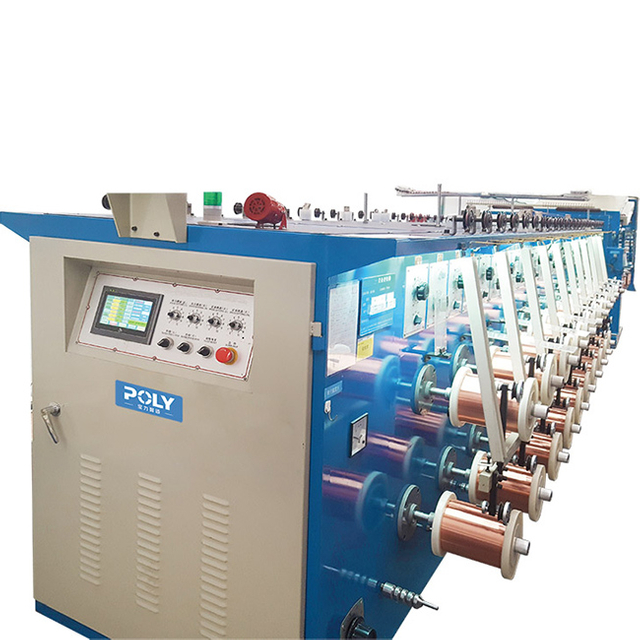
Tubular annealing-tinning machines are designed to perform two critical functions in wire production: annealing, which enhances the wire's flexibility, strength, and conductivity, and tinning, which provides the wire with a layer of tin for corrosion resistance and improved solderability. The ability to customize these machines to suit specific industry needs is key to ensuring that wires meet the stringent performance requirements demanded by different applications.
In this article, we will explore how customizable features in tubular annealing-tinning machines can address the unique demands of various industries. We will discuss the technological advancements that have enabled these machines to be tailored to specific needs, and how such customizations improve quality, efficiency, and cost-effectiveness in wire manufacturing.
Before we dive into the customization options available in tubular annealing-tinning machines, let’s first revisit the annealing and tinning processes, as they form the core of these machines.
Annealing is a heat treatment process that involves heating the wire to a specific temperature and then gradually cooling it. This process helps improve the wire's ductility, workability, and electrical conductivity. Annealing also relieves internal stresses created during wire drawing and ensures a more uniform grain structure, making the wire more flexible and less likely to break or crack during further processing or use.
Tinning involves applying a thin layer of tin to the wire, typically by dipping it into a molten tin bath. This coating provides several key benefits:
Corrosion resistance: Tin prevents the wire from oxidizing or corroding when exposed to environmental factors such as moisture and air.
Solderability: Tinned wires are much easier to solder, making them ideal for use in electronic circuits and component assembly.
Durability: The tin coating increases the wire's durability and lifespan, especially in high-humidity environments or areas exposed to harsh conditions.
The combination of these two processes, carried out simultaneously in a tubular annealing-tinning machine, ensures that wires produced are highly durable, flexible, and ready for use in a variety of applications.
As industries continue to demand more specialized products, customization has become an essential feature for tubular annealing-tinning machines. Manufacturers now offer a wide range of customizable options to meet the specific demands of different industries. Let’s take a closer look at how these customizable features can help meet the unique needs of various sectors.
The annealing process requires precise control of the wire’s temperature to ensure that it is neither overheated nor underheated. Different industries often require wires to undergo different annealing conditions based on their end-use, which is why the ability to customize temperature control systems is crucial.
Customizable Heating Zones: Some tubular annealing-tinning machines offer multi-zone heating systems that allow for precise control of temperature at various stages of the wire. These systems are particularly useful when dealing with wires of different gauge sizes, as each gauge may require different heating settings.
Induction Heating: Modern machines can be customized to include induction heating systems, which offer more efficient, precise, and rapid heating compared to traditional methods. This is ideal for industries like electronics and automotive, where speed and precision are critical.
By customizing the temperature settings and heating systems, manufacturers can ensure that wires undergo the perfect annealing process for their specific applications, whether it’s softening the wire for soldering or maintaining high strength for power transmission.
The tinning process plays a significant role in ensuring the wire’s durability and performance, particularly in electrical and telecommunications applications. Customizing the tinning bath to suit different materials, wire sizes, and production speeds is essential for achieving high-quality results.
Tin Alloy Composition: Some industries, such as aerospace and automotive, require wires that have high-temperature resistance or specialized alloy coatings. Tubular annealing-tinning machines can be customized to accommodate tin alloys that meet these specific performance criteria.
Multiple Tinning Stages: For wires that require enhanced corrosion resistance or multiple coatings, machines can be configured to use multi-stage tinning processes. This involves applying multiple layers of tin or different alloys to the wire, making it suitable for use in highly demanding environments like marine or outdoor installations.
Bath Control System: Advanced automated tinning bath control systems allow operators to maintain optimal temperature, flow rate, and tin concentration throughout the process. Customizing these systems ensures that the tin coating is applied uniformly and precisely, reducing waste and ensuring consistent product quality.
These customizable features enable manufacturers to fine-tune the tinning process to meet specific industry needs, whether it's for high-performance electronics or corrosion-resistant cables used in harsh environments.
Wire used in different industries comes in various sizes and gauges. The ability to adjust the machine’s settings to accommodate different wire types is a key feature of modern tubular annealing-tinning machines.
Variable Feed Speeds: Tubular annealing-tinning machines can be customized to adjust the feeding speed of the wire, ensuring optimal processing for wires of different diameters and gauge sizes. This flexibility is important for industries like automotive, where wires of varying sizes are needed for different electrical components.
Multi-Size Compatibility: Some machines feature modular designs that allow the configuration to easily handle wires of varying lengths, diameters, and materials. This makes them suitable for industries with diverse wire requirements, such as telecommunications, where different wire gauges are used for different signal transmission needs.
By ensuring that machines are adaptable to a wide range of wire types and sizes, manufacturers can meet the specific demands of different industries, improving production flexibility and product quality.
Manufacturers often need to balance high throughput with maintaining quality standards. Customizing the speed and throughput of tubular annealing-tinning machines allows manufacturers to optimize their production process based on demand.
Adjustable Processing Speeds: Tubular annealing-tinning machines can be customized to run at different speeds depending on the wire’s material and the required process parameters. For example, high-speed machines are ideal for industries where large-scale production is required, such as automotive and telecommunications, while slower speeds may be more suitable for high-precision wire used in electronics.
Efficiency in Large-Scale Production: Some machines are designed for continuous operation, with advanced wire tracking systems that ensure smooth feeding and consistent quality during high-speed production. This is particularly important for large manufacturers that require constant output without sacrificing quality.
By customizing the speed and throughput, manufacturers can adapt their machines to meet both small-scale and high-volume production needs, maximizing efficiency and ensuring consistent product quality.
Automation plays a significant role in improving the overall efficiency and accuracy of the wire manufacturing process. Customizable automation and monitoring systems ensure that every aspect of the annealing and tinning processes is controlled precisely.
Automated Feeding Systems: These systems can be customized to automatically adjust the feeding rate of the wire, preventing any interruptions or slowdowns in the production process. This minimizes human intervention and reduces the chance of errors.
Real-Time Monitoring: Many modern tubular annealing-tinning machines are equipped with smart sensors and real-time monitoring systems that track temperature, pressure, speed, and tinning thickness throughout the process. These systems can be customized to send alerts if any parameters fall outside the required range, enabling operators to make adjustments in real-time.
Predictive Maintenance: The incorporation of predictive maintenance systems helps identify and address potential issues before they cause significant downtime. This ensures that machines are operating at peak efficiency, reducing maintenance costs and improving overall productivity.
With customizable automation and monitoring systems, manufacturers can achieve higher efficiency, improve quality control, and reduce maintenance costs.
The ability to customize tubular annealing-tinning machines to meet specific industry demands provides numerous benefits for manufacturers. Here are some of the key advantages:
Customization ensures that the wire undergoes the perfect annealing and tinning process for its intended application. Whether it’s for electronics, power transmission, or telecommunications, these machines ensure consistent and high-quality wire production, meeting the stringent requirements of each industry.
By optimizing machine settings for different wire types, gauges, and production speeds, manufacturers can improve production efficiency. Customization allows for faster throughput, reduced waste, and greater consistency, which ultimately leads to lower operational costs.
Customization options like automated feeding, real-time monitoring, and predictive maintenance ensure that the machines operate smoothly with minimal interruptions. This reduces downtime, ensuring higher production rates and more reliable output.
Advanced heating and tinning technologies help reduce energy consumption, leading to lower operational costs. Customizable energy-efficient systems, such as induction heating and recycling systems, allow manufacturers to optimize energy usage and reduce their carbon footprint.
As industries evolve and customer needs change, the ability to customize tubular annealing-tinning machines allows manufacturers to remain flexible and adaptable. This is crucial for staying competitive in industries like automotive, electronics, and telecommunications, where wire specifications can change rapidly.
Customizable tubular annealing-tinning machines are revolutionizing the wire manufacturing industry by providing solutions that cater to specific industry demands. The ability to adjust temperature control, tinning bath settings, wire size compatibility, speed, and automation allows manufacturers to produce high-quality, energy-efficient, and cost-effective wire for various applications.
As industries continue to grow and diversify, the need for specialized wire products will only increase. The right customization options can help manufacturers meet these demands, improve production efficiency, and enhance product quality, leading to greater profitability and sustainability.
By embracing the latest advancements in tubular annealing-tinning technology, manufacturers can stay ahead of the curve and position themselves as leaders in an ever-evolving industry.

 English
 简体中文
简体中文

