
- Home
- Products
- Company
- Solutions
- Advantages
- Blog
- Contact
- Hot
Views: 0 Author: Site Editor Publish Time: 2025-12-12 Origin: Site


The production of precision wires is a vital aspect of numerous industries, including electronics, automotive, telecommunications, and power transmission. A critical component in the manufacturing of these wires is the process of annealing and tinning. Both processes enhance the wire’s ductility, electrical conductivity, and corrosion resistance, making them suitable for high-performance applications. Tubular annealing-tinning machines have become an essential part of the wire manufacturing process, especially as demand for precision and quality increases.
Technological advancements in these machines have greatly improved the efficiency, quality, and sustainability of wire production. These improvements not only benefit manufacturers by reducing costs but also lead to higher-quality wires that meet the stringent demands of modern industries. In this article, we will explore the technological advancements in tubular annealing-tinning machines, how they work, the innovations that have enhanced their performance, and the advantages of these innovations in precision wire production.
Before we delve into the technological advancements, it’s important to understand the core functions of tubular annealing-tinning machines.
Annealing is a heat treatment process used to increase the ductility and workability of the wire. It involves heating the wire to a specific temperature and then allowing it to cool slowly. This process reduces the internal stresses of the wire and enhances its ability to be shaped into thinner forms. Annealing also improves the electrical conductivity of the wire by allowing the atoms in the metal to realign, creating a more uniform grain structure. This process is particularly important for wires used in electrical and electronic applications.
Tinning is the application of a thin layer of tin over the surface of the wire. This coating provides several key benefits:
Corrosion Resistance: Tin is resistant to rust and corrosion, making the wire more durable when exposed to environmental factors such as moisture and chemicals.
Improved Solderability: Tinned wires are easier to solder, which is crucial for the electronics industry where wires must be connected to circuit boards.
Durability: The tin coating extends the life of the wire by protecting it from oxidation.
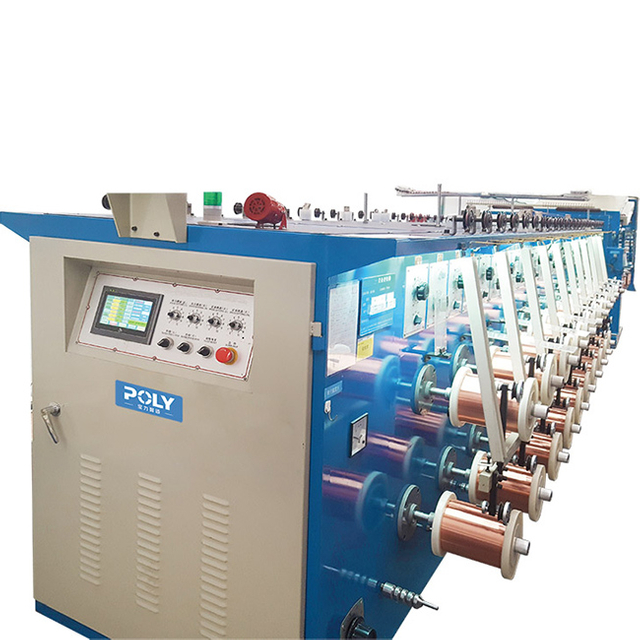
A tubular annealing-tinning machine is a specialized piece of equipment designed to simultaneously perform both the annealing and tinning processes. The machine typically consists of a tubular furnace for heating the wire, a tinning bath for applying the tin coating, and cooling zones to ensure the wire is cooled at the right rate. The wire is continuously fed through the system, undergoing the annealing process in the furnace, followed by immersion in the tin bath for coating. The system is designed for high-speed, high-precision wire production, making it ideal for industries that require large quantities of wire with consistent quality.
The demand for precision wire is growing in industries like telecommunications, electronics, and automotive, where high-quality and reliable components are critical. This demand has led to the development of advanced tubular annealing-tinning machines that can deliver faster production speeds, higher-quality wires, and lower energy consumption. Here are some of the key technological advancements in these machines:
The heating process in the annealing stage is crucial for achieving the desired wire properties. Advances in heating technologies have made the annealing process more energy-efficient and precise.
Induction Heating: One of the most significant advancements in heating technology is induction heating. This method uses electromagnetic fields to heat the wire directly, providing more uniform heating and faster processing times. Induction heating allows for precise temperature control, reducing energy consumption and improving the consistency of the annealed wire.
Electric Resistance Heating: Modern tubular annealing-tinning machines use electric resistance heaters that offer better temperature stability and uniformity. These systems can be easily adjusted to achieve the required temperatures for different wire types and applications.
Infrared Heating: Some machines have integrated infrared heating elements, which use infrared radiation to heat the wire. This method ensures quick heating, reduces energy loss, and is particularly effective in high-speed production lines.
These advanced heating technologies lead to better control over the annealing process, which results in higher-quality wire with consistent electrical conductivity and improved mechanical properties.
The tinning process is highly sensitive and requires precise control over the temperature, concentration, and flow of the tin bath. Advances in tinning bath technology have made the process more efficient and consistent.
Automated Bath Control: Modern machines feature automated systems that can continuously monitor and adjust the temperature and tin concentration of the bath. This ensures that each wire receives a consistent coating and improves the overall quality of the tinned wire.
Energy-Efficient Tin Baths: Newer machines use energy-efficient tin bath systems that maintain optimal temperatures with minimal energy consumption. This is particularly important for high-volume production, where reducing energy costs can have a significant impact on overall operational expenses.
Multi-Stage Tinning: Some advanced machines use multi-stage tinning processes, where multiple layers of tin or tin alloys are applied to the wire. This increases the wire’s corrosion resistance and durability, especially for wires used in harsh environments.
These advancements ensure that the tinning process is carried out more efficiently, resulting in higher-quality and more durable wires that meet the demands of various industries.
After the annealing and tinning processes, the wire must be cooled at a controlled rate to preserve its mechanical properties and finish. The cooling stage has also seen significant advancements to improve energy efficiency and ensure high-quality wire.
Forced Air Cooling: Modern cooling systems use forced air to rapidly cool the wire after it passes through the tinning bath. The controlled airflow ensures that the wire cools evenly and reduces the risk of warping or distortion.
Water-Cooled Systems: For higher cooling speeds, many machines are equipped with water-cooled systems. These systems use a closed-loop water circuit to absorb heat from the wire, ensuring that it cools at the correct rate.
Programmable Cooling Stages: Some newer machines feature programmable cooling stages, allowing the operator to control the rate of cooling based on the wire size, material, and application. This provides more flexibility and precision in the cooling process.
The improved cooling systems ensure that the wire cools at the optimal rate, maintaining its strength and flexibility while preventing defects or inconsistencies in the coating.
Automation and smart control systems have become essential in modern tubular annealing-tinning machines. These systems streamline production, improve efficiency, and ensure consistent quality.
Automated Feeding Systems: New machines feature automated wire feeders, which continuously feed wire into the system at a consistent rate. This reduces manual labor and minimizes the risk of errors or inconsistencies during production.
Real-Time Monitoring and Control: Smart sensors and control systems allow operators to monitor key parameters such as temperature, pressure, and speed in real time. These systems can make automatic adjustments to optimize the process, ensuring consistent quality and reducing the likelihood of defects.
Data Logging and Analytics: Advanced machines are now equipped with data logging capabilities that track every step of the annealing and tinning process. This data can be used for quality control, identifying trends, and optimizing future production runs.
The integration of automation and smart systems increases production efficiency, reduces the potential for human error, and allows manufacturers to respond quickly to changes in production requirements.
With the increasing demand for more space-efficient and cost-effective solutions, modern tubular annealing-tinning machines have become more compact and modular in design. These machines can be customized to fit various production environments, from small-scale operations to large factories.
Modular Design: Modular machines allow businesses to configure their systems based on specific production needs. For example, companies can add or remove stages of tinning or adjust heating systems based on their wire requirements. This flexibility allows manufacturers to scale their operations easily.
Space-Efficient Designs: New machines are designed to take up less floor space while still providing high performance. This is particularly beneficial for businesses with limited space or those looking to expand without having to overhaul their existing production line.
These innovations provide manufacturers with greater flexibility, space-efficiency, and customization, enabling them to meet the growing demands of precision wire production.
The technological advancements in tubular annealing-tinning machines have brought several benefits to manufacturers, helping them meet the growing demand for high-quality precision wire. These advancements result in:
With faster heating, precise tinning, and automated feeding systems, modern machines can achieve higher throughput while maintaining consistent product quality. Manufacturers can meet increased demand and improve their production capacity without compromising quality.
Advancements in heating, tinning, and cooling systems ensure that wires have uniform coatings, consistent ductility, and enhanced conductivity. This makes the wires suitable for high-performance applications, such as electronics, automotive wiring, and telecommunications.
The integration of energy-efficient heating, modular designs, and smart control systems has significantly reduced operational costs. Manufacturers can achieve higher efficiency with lower energy consumption and minimal waste, resulting in cost savings over time.
The modular design and programmable systems allow manufacturers to customize their machines based on production needs. This flexibility makes it easier to produce a variety of wire types, whether they require single or multi-layer tinning, different annealing temperatures, or specialized coatings.
The efficiency improvements and energy-saving technologies in modern machines contribute to reducing the environmental impact of wire production. The adoption of these machines can help manufacturers meet sustainability goals by reducing energy consumption and waste.
Technological advancements in tubular annealing-tinning machines have greatly improved the efficiency, quality, and sustainability of precision wire production. Innovations such as advanced heating technologies, precise tinning bath controls, automated systems, and modular designs have enabled manufacturers to meet the growing demand for high-quality wire in industries like electronics, automotive, and telecommunications.
These advancements not only increase production speed and improve wire quality but also help businesses reduce operational costs, enhance flexibility, and achieve sustainability goals. As industries continue to demand more high-performance wire for their applications, the role of advanced tubular annealing-tinning machines will become even more critical in ensuring precision, efficiency, and cost-effectiveness.
The future of wire manufacturing is bright, with these technological innovations continuing to drive improvements in both product quality and production efficiency. As the industry evolves, tubular annealing-tinning machines will play an increasingly important role in shaping the future of precision wire production.

 English
 简体中文
简体中文

