
- Home
- Products
- Company
- Solutions
- Advantages
- Blog
- Contact
- Hot
Views: 0 Author: Site Editor Publish Time: 2025-09-11 Origin: Site


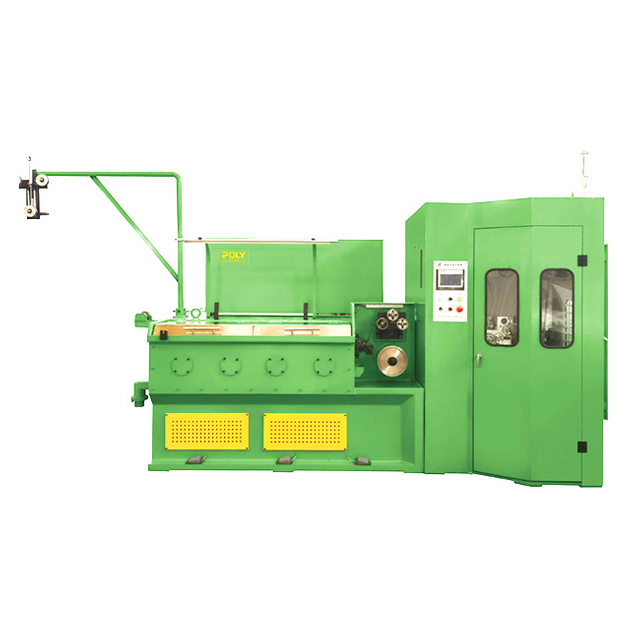
Yes—aluminum, whether in pure form or as many commercial alloys, can indeed be cold-drawn into wire using a wire drawing machine. The success of the process, however, depends on careful selection of alloy, proper preparation of billets or rods, and well-controlled drawing conditions. At Zhangjiagang Poly Machinery and Electric Manufacturing Co., Ltd., together with Zhangjiagang Poly Intelligent Equipment Co., Ltd., we have decades of expertise in designing and producing wire drawing machines that ensure aluminum wire drawing meets demanding performance standards for industries worldwide.
Wire drawing is fundamentally a test of how well a metal can withstand plastic deformation without fracturing. When considering aluminum, its relatively high ductility compared to other structural metals makes it naturally suitable for drawing. But the story goes deeper.
During the drawing process, aluminum wire is forced through progressively smaller dies. Each reduction in cross-section changes the microstructure of the metal. While aluminum’s ductility allows it to stretch considerably, it also work hardens. That means dislocations in the crystal lattice accumulate, raising strength but reducing further formability. Without careful control of reduction ratios and, in some cases, annealing steps, excessive work hardening could cause cracking or poor surface quality.
It is also important to note that the work hardening rate differs among alloys. Some alloys strengthen very rapidly under strain, which limits how many reductions can be achieved before annealing is required. Others deform more gradually, allowing longer uninterrupted drawing schedules. Understanding these differences is essential for designing efficient production lines and minimizing downtime.
Not all aluminum grades behave the same way during drawing. Pure aluminum, with minimal alloying elements, maintains excellent ductility and can be drawn down to fine diameters without much difficulty. In contrast, alloys such as 5xxx or 6xxx series, which contain magnesium or magnesium-silicon, may require modified drawing schedules due to reduced ductility. These alloys are often chosen when additional strength or corrosion resistance is needed, but they demand more careful process design.
Another consideration is electrical performance. High-purity aluminum offers better conductivity, making it ideal for electrical cables, while alloyed versions may sacrifice conductivity for strength. Buyers must match the right grade with their end-use requirements—whether it is transmission cables, mechanical wires, or specialty applications.
Before aluminum reaches the drawing machine, it undergoes several preparatory stages. These steps directly influence drawing performance and final product quality.
The usual route begins with casting an aluminum billet, which is then hot extruded into a rod. Extrusion quality is critical: surface defects, inclusions, or nonuniform grain structures can cause breakage during drawing. Proper extrusion ensures a uniform, defect-free rod with controlled grain size, ready to be reduced further in the drawing line.
Producers also pay attention to homogenization treatments before extrusion. By carefully heating and cooling billets, they minimize segregation of alloying elements, resulting in a more stable rod structure. These early steps may not be visible in the final product, but they make the difference between smooth, trouble-free drawing and repeated failures in production.
Once rods are produced, they are drawn cold through a series of dies that gradually reduce the diameter. This sequence may involve dozens of passes, depending on the final wire size required. Progressive die reduction avoids excessive strain in a single step and produces wires with smooth surfaces and consistent mechanical properties.
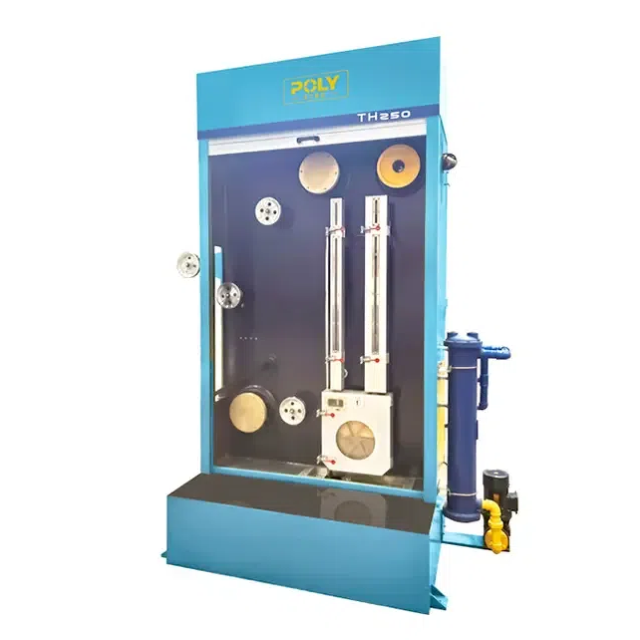
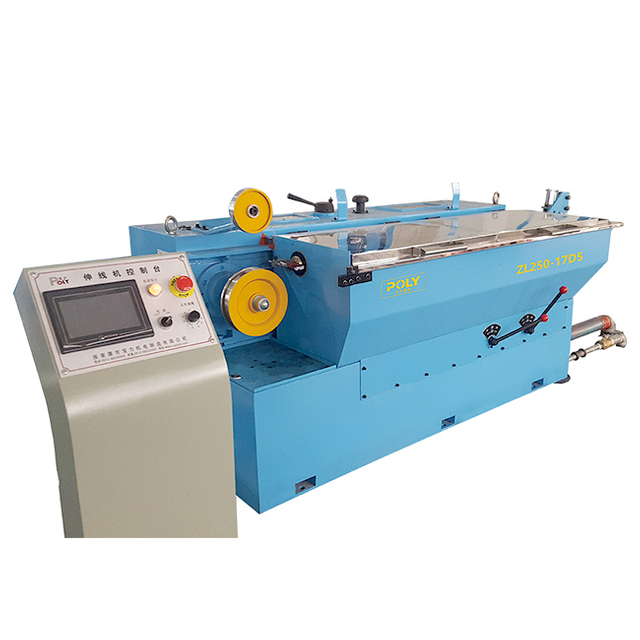
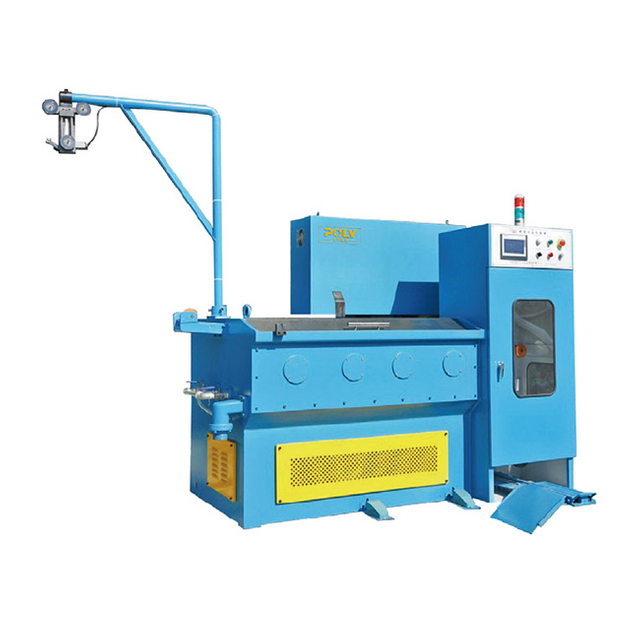
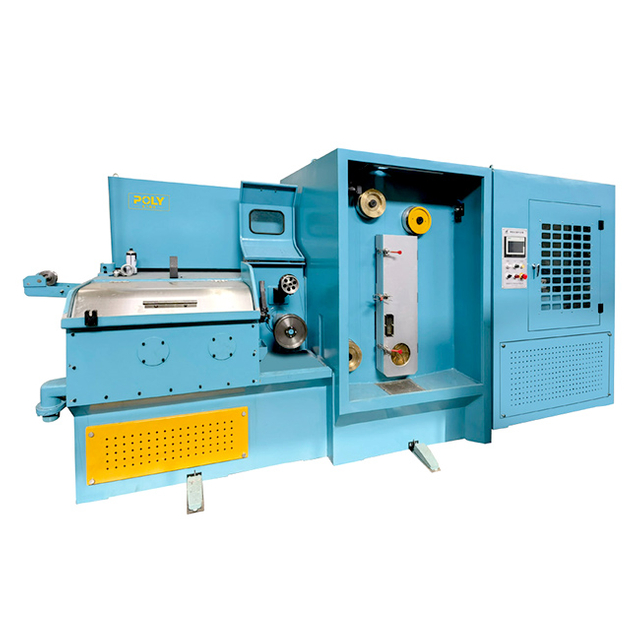
For large-scale operations, continuous drawing lines with automated capstans are used, allowing high-speed reduction with tight control of tension. The equipment must be designed to handle aluminum’s relatively soft surface while preventing scratches or metal pick-up. With the advanced wire drawing machines developed by Zhangjiagang Poly, precision die alignment and automated tension control help achieve these goals consistently, even at industrial scale.
Although aluminum wire drawing is widely practiced, there are practical tradeoffs compared to other materials such as copper or steel.
Aluminum has only about 61% of copper’s electrical conductivity. For electrical applications, that means thicker aluminum conductors are required to carry the same current. However, aluminum is one-third the density of copper, making it far lighter. In power transmission lines, weight reduction translates into lower structural costs and easier installation. For this reason, aluminum conductors are the global standard for overhead power cables, even though copper is still preferred in compact wiring applications.
Aluminum also provides cost advantages. Because of its lower material cost per unit length, aluminum wiring has been widely adopted in infrastructure and utility projects. It may not always replace copper in electronics or household wiring, but it delivers unmatched efficiency for large-scale power distribution.
When drawn to very fine diameters, aluminum wires can suffer from reduced tensile strength compared to steel or copper equivalents. Applications that demand high fatigue resistance—such as repeated bending in springs or ultra-fine electronics—may highlight aluminum’s limitations.
Another challenge lies in corrosion. Bare aluminum wire can oxidize rapidly when exposed to air, forming a thin oxide film. While this layer protects against deeper corrosion, it may increase contact resistance in electrical applications. Surface treatments and coatings are therefore often combined with drawing to ensure performance.
High-quality drawing machines minimize these risks by maintaining smooth die surfaces, optimized die angles, and constant lubrication. By integrating automatic lubrication systems, Zhangjiagang Poly equipment reduces friction and ensures a cleaner surface finish, even at high speeds.
To achieve reliable results in aluminum wire drawing, attention must be given not only to metallurgy but also to equipment design and process control.
Drawing dies are the heart of the process. For aluminum, tungsten carbide or polycrystalline diamond dies are commonly chosen due to their wear resistance. Die angle directly affects deformation behavior: too steep, and the aluminum may tear; too shallow, and friction increases, raising temperature and wear.
Equally important is lubrication. Aluminum tends to gall against tool steel, so selecting high-performance lubricants and applying them correctly ensures smoother drawing and longer die life. Water-soluble lubricants are often used for environmental and safety reasons, but they must provide sufficient film strength under high loads. Our wire drawing machines are designed with advanced lubrication systems that maintain stable film formation, even at high speeds.
For certain aluminum alloys or when producing very fine wire, intermediate annealing becomes necessary. By reheating the wire to controlled temperatures, strain hardening is relieved, restoring ductility for further reductions.
Modern production lines integrate annealing furnaces seamlessly, ensuring minimal interruption. In parallel, continuous quality control—measuring diameter, roundness, and surface condition at multiple checkpoints—guarantees that the final product meets customer specifications. Zhangjiagang Poly integrates intelligent monitoring systems in our wire drawing machines to support this precision.
In summary, aluminum can absolutely be drawn into wire using a wire drawing machine, provided that the right alloy is chosen, billets and rods are well prepared, drawing schedules are carefully planned, and lubrication and inspection are maintained throughout the process. Compared to copper or steel, aluminum offers significant weight and cost advantages, though conductivity and strength must be considered. With more than twenty years of experience, Zhangjiagang Poly Machinery and Electric Manufacturing Co., Ltd., and Zhangjiagang Poly Intelligent Equipment Co., Ltd. continue to deliver advanced equipment that ensures consistent, high-quality aluminum wire drawing. For tailored solutions or technical consultation, please contact us today.



 English
 简体中文
简体中文

