
- Home
- Products
- Company
- Solutions
- Advantages
- Blog
- Contact
- Hot
Views: 0 Author: Site Editor Publish Time: 2025-09-09 Origin: Site


Producing aluminium wire that meets both performance and quality standards requires more than just feeding metal through a die. At Zhangjiagang Poly Machinery and Electric Manufacturing Co., Ltd., we have spent over two decades developing advanced wire drawing machines designed to achieve high straightness, excellent surface finish, and consistent mechanical properties. This article provides a clear, step-by-step guide on how to draw aluminium wire using a wire drawing machine, from material preparation to final inspection, so that operators and sourcing managers can better understand what is required for reliable production. By following these guidelines, companies can optimize output, minimize downtime, and ensure their products meet international standards.
The first step in drawing aluminium wire is selecting the proper feedstock. Aluminium comes in a wide range of alloys, each suited to different applications. Pure aluminium (1xxx series) offers superior conductivity, making it suitable for electrical applications, while aluminium-magnesium (5xxx series) or aluminium-silicon alloys provide better strength and corrosion resistance. Operators must also pay attention to the source of the rod or ingot, as surface quality and homogeneity of the billet will directly affect drawing performance and final product quality. Reliable suppliers ensure fewer inclusions, minimal porosity, and uniform grain structure, which reduces the risk of wire breakage during drawing. For companies aiming at large-scale production, consistency of the incoming rod is one of the strongest factors influencing yield.
Before the aluminium rod is introduced into the wire drawing machine, it requires surface preparation. Oxide layers, dirt, or scale on the rod can damage the dies and compromise surface finish. Mechanical brushing, chemical cleaning, or abrasive blasting are common techniques to remove impurities. The rod must also be cut into appropriate lengths or coiled dimensions suitable for the drawing machine. A typical starting rod diameter ranges from 8 mm to 12 mm, which will then be progressively reduced through multiple passes. Proper pre-processing not only improves drawing stability but also extends the life of the drawing dies.
Wire drawing is achieved by reducing the cross-sectional area of the rod through a sequence of dies. To prevent wire breakage and ensure smooth processing, the reduction per pass must be carefully calculated. In aluminium drawing, a typical reduction per pass ranges between 15% and 25% of the cross-sectional area, depending on alloy type and lubrication conditions. Too high a reduction can overstress the wire, while too low a reduction increases production time and cost. Operators calculate this by comparing the initial and final diameters, then distributing reductions across all planned passes. Planning the reduction schedule in advance also makes it easier to control machine speed and tension during production.
The geometry of the drawing die is another critical factor. Die angles typically fall within 6 to 12 degrees for aluminium. A sharper angle reduces drawing force but increases friction and heat generation, while a larger angle may lead to surface scratches or poor dimensional accuracy. Entry zones must be smooth to guide the wire, and exit zones should provide gradual release to avoid marks. Selecting high-quality tungsten carbide or polycrystalline diamond dies ensures durability and stable wire surface quality over long runs. Investing in well-designed dies directly reduces the risk of downtime caused by premature wear.
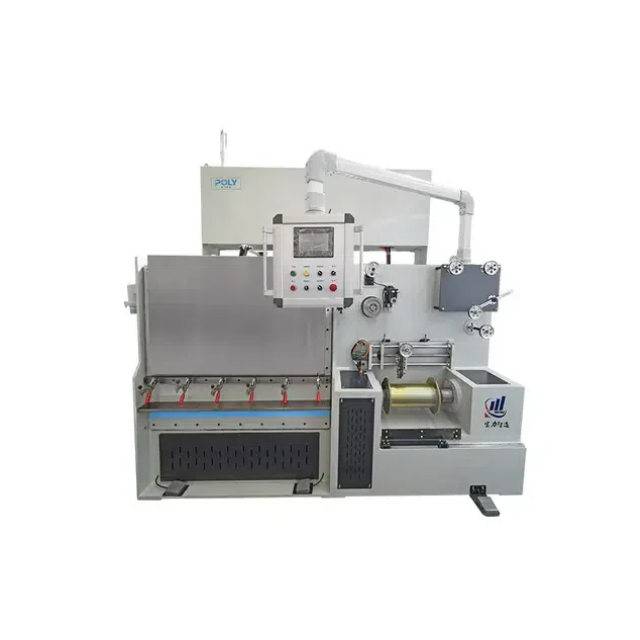
Once the reduction schedule is designed, the wire drawing machine must be configured for optimum speed and tension. Drawing speeds for aluminium generally range from 5 to 25 meters per second depending on wire diameter and lubrication conditions. Tension must be carefully balanced between capstans to prevent wire snapping or uneven elongation. Multi-capstan machines allow gradual acceleration and better force distribution across passes, which is essential for achieving smooth processing. Skilled operators monitor the relationship between wire diameter, die geometry, and machine speed to avoid defects such as uneven thickness or waviness.
Operators must continuously monitor the drawing force applied by the wire drawing machine. Force spikes can occur due to die wear, contamination, or inconsistent lubrication. If left unchecked, these spikes can cause die damage, wire surface defects, or unexpected breakage. Installing sensors and monitoring systems allows operators to react quickly, adjusting lubrication or tension to stabilize production. Predictive maintenance and timely die replacement are equally important to prevent costly downtime. In high-volume plants, digital monitoring systems have become an essential tool for quality assurance.
Lubrication plays a central role in aluminium wire drawing. The right lubricant minimizes friction, reduces heat generation, and improves die life. For aluminium, fluid-based lubricants are often preferred because they provide consistent film coverage and better cooling capacity. However, powder lubricants can be applied in specific cases where dry film lubrication is beneficial. The choice depends on the product requirement and machine type, but in both cases, even distribution across the wire surface is essential. High-quality lubricants not only improve surface finish but also lower energy consumption by reducing friction.
If an emulsion-based lubricant is used, operators must carefully maintain its concentration, pH, and cleanliness. Contamination with metal fines, dust, or scale can reduce lubrication efficiency and scratch the wire surface. Regular filtration systems should be installed on the wire drawing machine to ensure lubricants remain effective over time. Proper cooling also prevents thermal damage to the wire and extends die life. A well-managed lubrication system is therefore a cornerstone of consistent, high-quality aluminium wire production. Companies that invest in automated lubrication control systems often see significant reductions in scrap rate.
Aluminium hardens as it is drawn, making it more difficult to reduce in subsequent passes. Intermediate annealing softens the material by relieving internal stresses and restoring ductility. For fine wire sizes, annealing may be required multiple times during the drawing process. Continuous annealing furnaces can be integrated into the production line for efficiency, while batch annealing provides flexibility for smaller volumes. The choice depends on production scale and customer specifications. Without proper annealing, wires may suffer from brittleness and break during final forming or installation.
Once the wire reaches its final diameter, quality control becomes essential. Surface inspections identify scratches, cracks, or inclusions that may affect performance. Mechanical tests such as tensile strength, elongation, and bend tests confirm compliance with standards. For electrical applications, conductivity checks ensure that the drawn aluminium wire meets resistance requirements. By combining mechanical and electrical testing, operators can guarantee that the finished wire is ready for use in demanding industrial or electrical environments. Final inspection not only secures customer confidence but also strengthens the reputation of the manufacturer.
Drawing aluminium wire with a wire drawing machine requires careful planning, precise machine setup, and strict quality control. From selecting the correct alloy and preparing the feedstock, to designing a reduction schedule, maintaining lubrication systems, and performing intermediate annealing, every step contributes to the final product’s performance. At Zhangjiagang Poly Machinery and Electric Manufacturing Co., Ltd., we design and manufacture advanced wire drawing machines that support operators with reliable performance, automation, and consistent quality results. For more information about our wire drawing solutions and to discuss your specific production needs, please contact us directly.



 English
 简体中文
简体中文

